Viren Bhalgamiya

AI Engineer focused on production-grade ML systems, agentic AI, and scalable backend platforms

M.Tech in Machine Learning @ DA-IICT | Strong DSA & AI/ML Background

I am an AI/ML Engineer specializing in Agentic AI and Generative AI systems, with hands-on experience building autonomous agents, multi-agent workflows, and production-grade RAG applications. I have a strong foundation in machine learning, system design, and full-stack AI development using FastAPI, LangGraph, and modern LLM stacks. My work focuses on building scalable, cost-efficient AI systems with real-world impact in education, security, and productivity domains.

Viren Bhalgamiya

Quick Facts

virubhalgamiya@gmail.com

📍 India | Open to global opportunities (EU / Remote)

AI / ML Systems
Backend & APIs
Agentic AI & Automation
Open to EU / US roles
Software Roles
Data Roles

About Me

I’m Viren Bhalgamiya, a software engineer and AI/ML practitioner with strong foundations in computer science and applied machine learning.

I build practical, production-grade systems rather than experimental prototypes, focusing on reliable integration of ML into backend platforms.

My work sits at the intersection of AI systems, backend engineering, and automation, emphasizing efficiency, cost-awareness, and real-world impact.

M.Tech in ICT (Machine Learning)
DA-IICT · 2024–2026 · CPI: 8.47 Focus: ML systems, NLP, applied AI
B.E. in Computer Engineering
GTU · 2020–2024 · CGPA: 8.66 Focus: DSA, OS, DBMS, Computer Networks
Currently looking for:
  • AI / ML Engineer roles
  • Backend or GenAI-focused positions
  • Teams building real-world, scalable AI systems
  • Software Roles
  • Data Roles

Experience

Experience of AI engineering and software development roles.

AI Engineer — CognitivTrust inc.
Dec - 2025 — Present • Remote

Building Agents that shows how agents can be useful to various cyber security related task such as vulnerability assessment and threat detection.

React FastApi Docker Python ML models Fine tuning Agentic AI
AI Intern — Duchas Technology
May 2025 - Sep 2025 • Hybrid

Built Automated Voice Assistant using AI technologies that helps to reduce manual email reading , writing and replying.

FastApi Python MongoDB Docker
Python Developer — Uncanny Consulting Services LLP
Jan 2024 — April 2024 • On-site

Worked as a Python Developer on Odoo ERP, developing and customizing backend modules, implementing business logic, and debugging Python-based workflows.

Python Odoo ERP Postgres
Machine Learning Intern — YBI Foundation
Jun 2024 — July 2024 • Remote

Built and trained machine learning models using Python, NumPy, Pandas, and scikit-learn, with a focus on data preprocessing and feature engineering.

Python NumPy Pandas scikit-learn

Skills

Comprehensive skills across programming, AI/ML, backend, cloud, devops, data and core CS concepts.

Programming
Python C++ JavaScript SQL
Machine Learning
Supervised: Linear / Logistic Regression Decision Trees & Random Forest Gradient Boosting (XGBoost, LightGBM) Support Vector Machines (SVM) k-NN Naive Bayes Clustering: KMeans, DBSCAN, Hierarchical PCA & Dimensionality Reduction Probabilistic & Bayesian methods
Deep Learning
Neural network CNNs (image models) RNNs / LSTM / GRU Transformers & Attention Seq2Seq & Translation Autoencoders & GANs Transfer learning & fine-tuning Optimization & regularization Distributed training (conceptual)
NLP
Tokenization & preprocessing Word embeddings (word2vec, GloVe) Contextual embeddings (BERT, RoBERTa) Sequence labeling (NER, POS) Text classification & sentiment Summarization & translation Semantic search & retrieval Language model fine-tuning Evaluation: BLEU, ROUGE, F1
Agentic AI
Agent orchestration & workflows LangChain / LangGraph (agent orchestration & workflows) Tool integration (APIs, web, DBs) Multi-agent coordination & communication Automated pipelines & playbooks Agent evaluation & safety
System Design & Architecture
Scalable system design API architecture & service boundaries Load handling & performance trade-offs Cost-aware architecture (ML systems) Backend + ML system integration
Backend
FastAPI Flask Django Node.js / Express REST & GraphQL APIs API versioning Rate limiting & throttling Websockets / Streaming Auth & OAuth (JWT, sessions) Background jobs & queues (conceptual) Postgres / MySQL Redis / Caching (performance & latency optimization) Error handling & resilience patterns API Design & Testing Deployment & Scalability
Gen‑AI
LLMs (GPT / Llama) Prompt engineering & prompts Retrieval-Augmented Generation (RAG) Embeddings & Vector DBs (Pinecone, Milvus) Instruction tuning & fine-tuning Evaluation & safety (hallucination mitigation) LLM cost optimization Few-shot / retrieval tuning
MLOps
Model serving patterns (BentoML, Seldon) CI/CD for models (GitHub Actions) Experiment tracking (MLflow, Weights & Biases) Monitoring & observability (Prometheus, Grafana) Feature stores & data pipelines Model versioning & rollout strategies Model monitoring & drift detection Containerization (Docker) & k8s deployments
Data
Pandas NumPy SQL / Data Modeling ETL & Data Pipelines Feature Engineering Time-series & Forecasting Clustering & Segmentation Recommendation Systems Data Visualization (matplotlib / seaborn / Plotly) Experiment Tracking (MLflow, Weights & Biases)
CS Concepts
DSA OS DBMS OOPS
Engineering Practices
Clean code & refactoring Debugging production issues Logging-first development Trade-off driven decisions Maintainable & testable code
DevOps / Tools
Docker & Docker Compose Kubernetes (k8s) basics Terraform (infra as code) CI/CD (GitHub Actions / Jenkins) Monitoring & Observability (Prometheus, Grafana) Cloud: AWS & GCP fundamentals Automated Testing & Linting Version Control (Git) workflows
Cloud
AWS Basics Vercel Render
Web Development
HTML5 & Semantic Markup CSS3, Flexbox & Grid Responsive Design JavaScript (ES6+) TypeScript React / Next.js Node.js & Express REST & GraphQL APIs Postgres & MongoDB Authentication (JWT, OAuth) Testing (Jest, Cypress) Docker & CI/CD Web Security & Performance

Personal Projects

Projects include AI agents, LangChain demos, recommendation systems, and dashboards — click a card to view README excerpt and open the repo.

Inventory Management
Inventory Management (MERN CRUD)

A MERN-stack inventory system demonstrating full CRUD for product records (create, read, update, delete). The repository includes a backend server and frontend client with instructions to run locally, and shows API interactions for listing and managing products stored in MongoDB.

Key Features:
  • Product CRUD (GET/POST/PUT/DELETE) operations
  • Separate Backend and Frontend (MERN architecture)
  • MongoDB for persistent storage and example run instructions
Tech Stack:
MongoDB Express React Node
AI Agent for Cyber Security

An AI agent framework for automating cybersecurity workflows: scanning, alert triage, and threat-intelligence enrichment. See the repo for implementation details and usage examples.

Key Features:
  • Automated vulnerability scanning and reporting
  • Incident triage assistance with prioritization heuristics
  • Threat intelligence enrichment and contextualization
  • Extensible agent plugins for integrations and playbooks
Tech Stack:
Python Agents Security
Expense Management System
Expense Management System with AI Insights

A full-stack expense manager: FastAPI backend with PostgreSQL, React frontend, and Groq LLM integration to generate AI-driven financial insights. Supports JWT authentication, role-based access (employee / manager), analytics dashboards, and Docker deployment instructions.

Key Features:
  • Expense submission, tracking and approval workflows
  • AI-powered spending analysis and categorization (Groq LLM)
  • Role-based permissions and analytics dashboard (Chart.js)
  • Docker-ready backend and frontend with API docs
Tech Stack:
FastAPI Postgres React Groq LLM
Recommendfy — E-Commerce Recommender

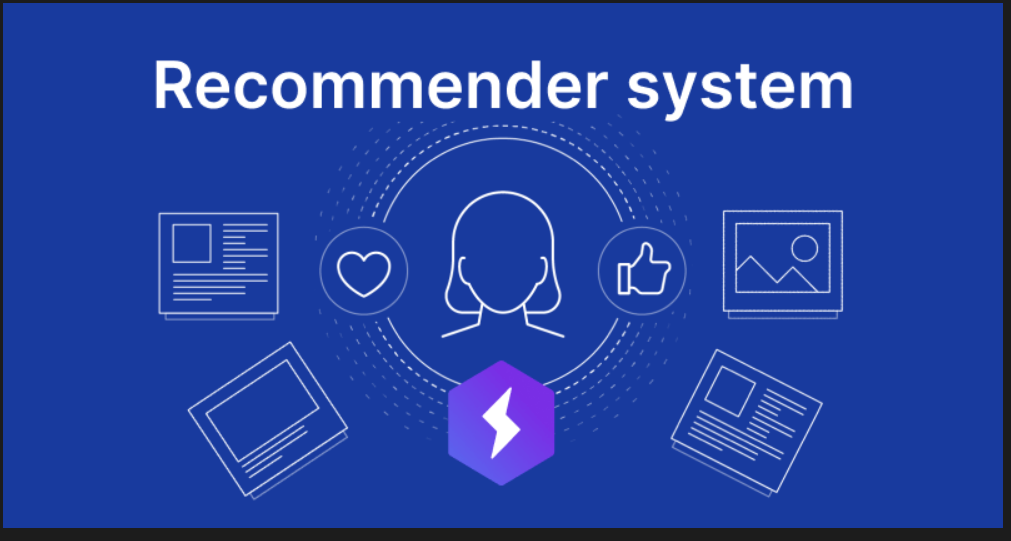
An e-commerce recommendation system built with Flask that implements content-based, collaborative filtering, hybrid, and multi-model recommendation strategies. The repo covers data preprocessing, model training, and integration of recommendations into a Flask web app for serving personalized suggestions.

Key Features:
  • Content-based, collaborative and hybrid recommenders
  • Model training and evaluation with scikit-learn / TensorFlow
  • Flask integration to display personalized recommendations
Tech Stack:
Flask scikit-learn TensorFlow
Customer Segmentation (K-Means)
Customer Segmentation (K‑Means)

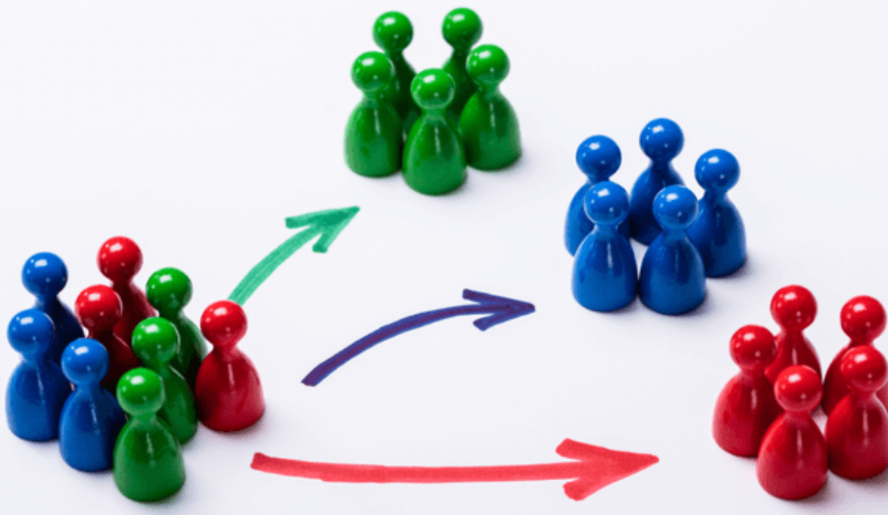
An exploration of customer segmentation using k-means clustering on a Mall Customers dataset (Kaggle). The README documents data exploration, visualization, and cluster-validation techniques (elbow, silhouette, gap statistic) to determine optimal k and interpret clusters for targeted marketing.

Key Features:
  • Data exploration and visualization (histograms, boxplots, PCA)
  • K‑Means clustering with cluster validation methods (elbow, silhouette, gap)
  • Interpretation of clusters for marketing segmentation
Tech Stack:
K‑Means Pandas Matplotlib
LangChain Chatbot with Memory
LangChain Google Gemini Chatbot

A Colab notebook showcasing a LangChain-based chatbot integrated with Google Gemini. Demonstrates message history (InMemoryChatMessageHistory), multiple sessions, prompt templates, message trimming to manage context, and runnable chains to compose model+memory behaviors.

Key Features:
  • Google Gemini integration via LangChain
  • Message history and multi-session support
  • Prompt templates, message trimming, and runnable chains
Tech Stack:
LangChain Google Gemini Python
Multilingual Sentiment Analysis Dashboard

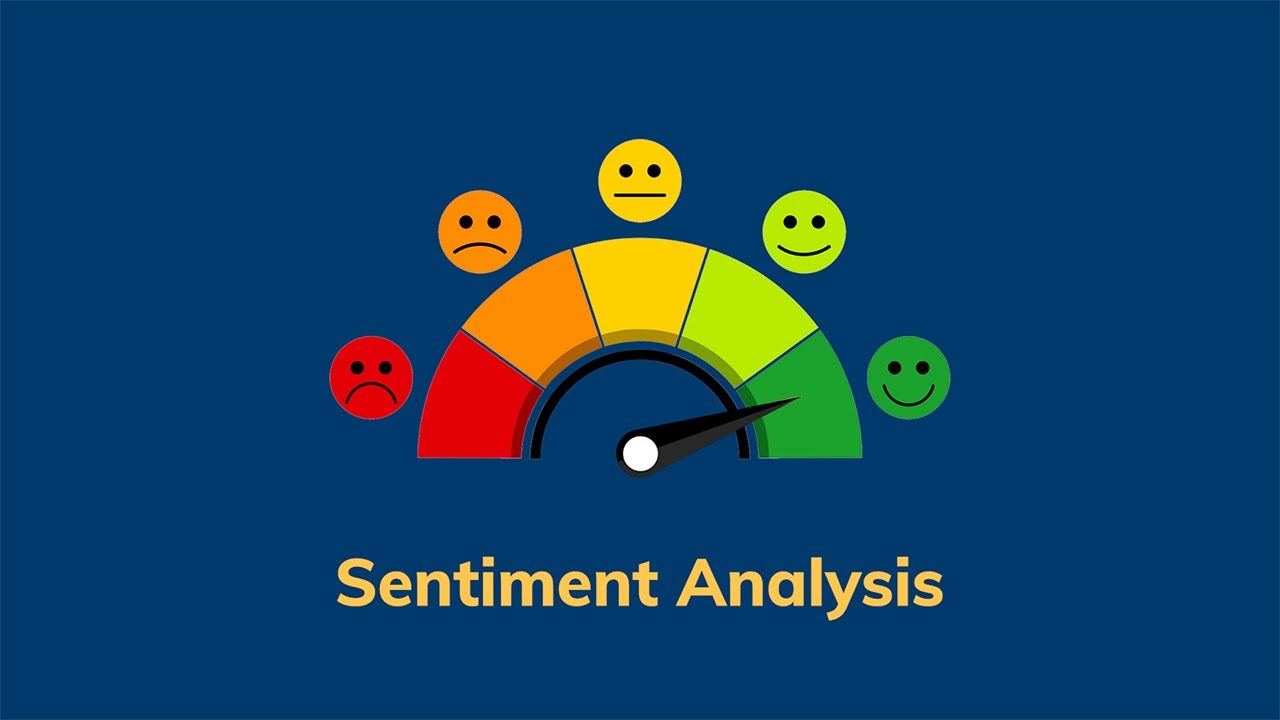
A sentiment analysis project combining classical and deep models: TF‑IDF + Multinomial Naive Bayes and an LSTM (TensorFlow/Keras) for multilingual text classification. Includes preprocessing with NLTK/SpaCy, evaluation (confusion matrix), and a Streamlit dashboard for visualization.

Key Features:
  • TF‑IDF + Naive Bayes baseline with hyperparameter tuning
  • LSTM model implemented with TensorFlow/Keras
  • Preprocessing (NLTK/Spacy) and Streamlit dashboard for results
Tech Stack:
TensorFlow scikit-learn NLTK
CodeBuddy
CodeBuddy

An AI-powered Virtual Teaching Assistant that analyzes code, errors, and user intent to provide context-aware guidance. It uses ML-based relatedness checks to reduce LLM usage and cost. Designed to enhance conceptual learning rather than answer dumping.

Key Features:
  • Intelligent input validation to ensure code, error, and issue relevance
  • Guided explanations instead of direct solutions to promote learning
  • Real-time code understanding and conceptual assistance
  • Automated error analysis with context-aware feedback
  • Cost-efficient architecture by minimizing unnecessary LLM calls
Tech Stack:
Python Machine Learning NLP CLI Tooling LLM Integration
Aadhaar Demographic Update Analysis

Exploratory analysis of Aadhaar demographic update data: cleaning, aggregation, and visualizations to surface trends across age, gender, and regional updates. Includes reproducible notebooks and summary charts.

Key Features:
  • Data cleaning and validation pipelines
  • Aggregated demographic summaries by region and time
  • Interactive visualizations and summary notebooks
Tech Stack:
Pandas Matplotlib Seaborn Jupyter

Let's work together

Available for AI/ML, Backend & GenAI roles — open to EU / US positions